Somali Syndicates Seize Six Cargo Ships as Iran War Drains Naval Patrols
With American and allied warships tied up in the Persian Gulf, global shipping companies are turning to data and private mercenaries to survive a 15-year piracy peak.
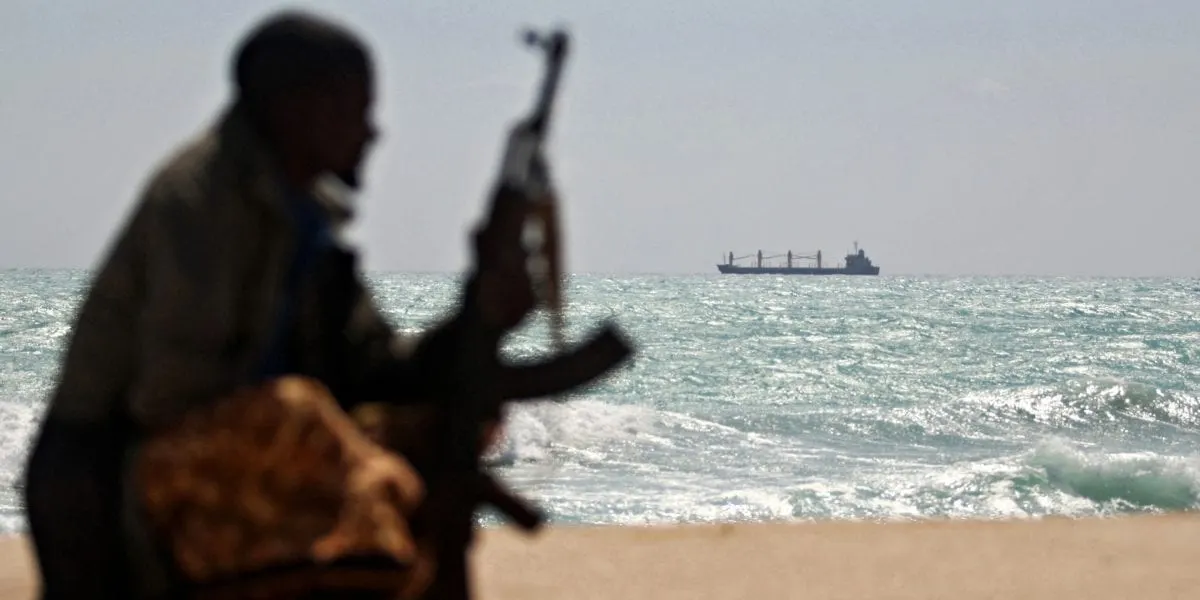
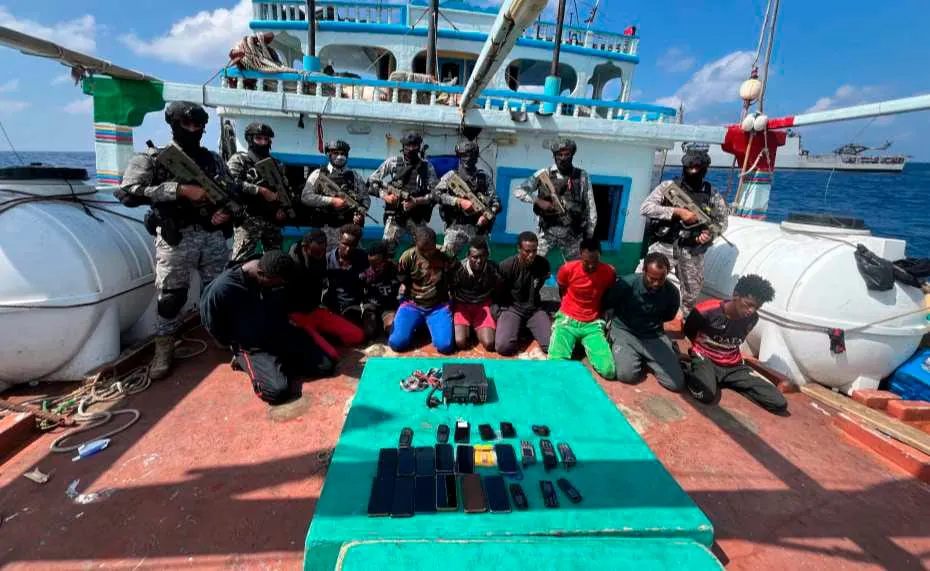
While the world's attention is fixed on the escalating conflict between the US and Iran, a ghost from the early 2000s has quietly returned to the Horn of Africa. Since April, Somali syndicates have hijacked six commercial vessels, taking roughly 100 crew members hostage. They aren't doing it out of political ideology; they are doing it because it pays exceptionally well. With Western naval fleets rushing toward the Persian Gulf, a massive security vacuum has opened up across one of the planet’s most critical trade routes.
The Economics of a Naval Vacuum
When the US-Iran conflict escalated in February 2026, allied warships naturally converged on the Persian Gulf and the Red Sea. But ocean security is a zero-sum game. Every destroyer reassigned to monitor the Strait of Hormuz leaves hundreds of miles of open water off the Somali coast unguarded.
The timing couldn't be better for opportunistic syndicates. The ongoing war has severely choked off the supply of crude oil and raw materials, sending commodity prices into the stratosphere. A single hijacked tanker loaded with fertilizer or crude is now worth exponentially more than it was just a year ago. To the youth lured into these piracy rings, this isn't an act of terror—it is a deeply rational, albeit illicit, economic enterprise.
The White House has publicly pushed back against the narrative of a security vacuum, insisting the US maintains a powerful and highly effective force in the region. But the numbers tell a different story. The Maritime Security Center reported 17 acts of piracy between January and May alone, and the pace has only accelerated as summer winds down.
A Force Multiplier for Supply Chain Chaos
The ripple effects are already being felt in the world's most monitored shipping lanes. Commercial traffic through the Strait of Hormuz has slowed to a crawl, with fewer than 20 cargo vessels passing through over a recent August weekend. Shipping firms are suddenly fighting a two-front war: dodging state-sponsored hostilities in the Gulf and outrunning pirate skiffs in the Indian Ocean.
“This is obviously a very, very lucrative business for them, and right now they have a far lower risk of American reaction to it because so many resources are tied up in the Middle East in general.”— Brett Erickson
Erickson points out that this resurgence is forcing companies to entirely rethink their routes. When pirates seized the Palau-flagged tanker Honor 25ho and the Togo-flagged Eureka, they proved that no flag of convenience provides immunity. Auxilium Worldwide CEO Ian Ralby notes that because the maritime security situation has widely deteriorated, the industry is witnessing attacks at their most frequent rate in nearly 15 years.
Swapping Destroyers for Data Streams
What makes the 2026 crisis genuinely remarkable is how the global supply chain is fighting back. During the peak of the 2005–2012 piracy epidemic—which cost the global economy $18 billion annually—commercial ships were largely passive targets waiting for a NATO task force to save them. Today, they are armed with predictive analytics.
Maritime intelligence organizations like Windward and Obsidian Risk Advisors are serving as real-time nerve centers for the shipping industry. Instead of relying solely on massive, stationary naval blockades, companies are dynamically assessing risk and adjusting their supply lines on the fly. It is a radical shift from brute-force military protection to decentralized, data-driven evasion.
The Return of the Private Mercenary
Military resources are finite, and as long as the Iran conflict burns, naval coverage off the Horn of Africa will remain dangerously thin. But the blueprint to defeat piracy exists, and the maritime industry is quietly dusting off its old playbooks. We are about to see a massive resurgence of armed private security contractors aboard commercial vessels.
Alongside non-lethal deterrents like long-range acoustic devices and water cannons, shipping conglomerates will increasingly fund their own protection. The future of global trade will rely less on the shrinking umbrella of American naval dominance and more on a privatization of ocean security. If state navies cannot guarantee safe passage, the free market will simply hire someone who can.
What people are saying

“The resurgence of Somali piracy is not simply a return of the old piracy problem—it is largely a product of the wider collapse in maritime security around the Red Sea, Gulf of Aden, and western Indian Ocean. International naval forces have been pulled toward the Red Sea and”

“🇸🇴 Somali piracy is surging to its worst level in over a decade — six commercial ships hijacked since April, per the IMB — and two more were seized in four days. On Aug. 17, pirates took the Cameroon-flagged cargo ship LUTUF ~3.5 nm off Eyl, Puntland. It was carrying Turkish”


“Two Ships Hijacked by #Pirates, 22 Indian #Seafarers Onboard! Marine Tanks New Delhi | August 21, 2026 Two separate piracy incidents near Yemen and Somalia have reportedly put 22 Indian seafarers onboard two commercial vessels at risk. In the first incident, the”
How War Sparked a Piracy Surge
More stories