
A Glacial Flood Erases China's Himalayan Gateway, and 2,980 People Are Missing
Nepal is pleading for international DNA-testing assistance as the remains of workers, tourists, and pilgrims are swept up to 150 miles downstream.
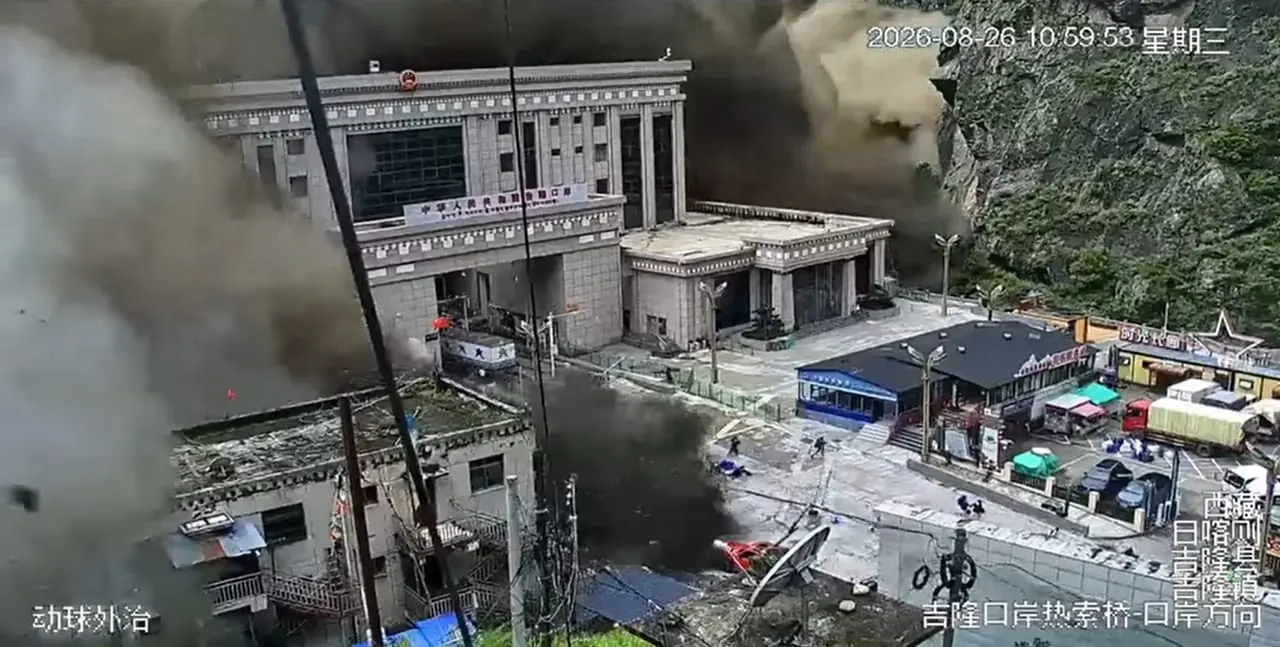
The Gyirong border complex survived the 8.1-magnitude Gorkha earthquake in 2015 without a scratch. On Wednesday, a falling glacier unleashed a flash flood so violent it completely erased the multi-million-dollar facility from the map. Now, rescuers navigating sheer cliffs are finding only bare rock, and nearly 3,000 people have simply vanished. The disaster has instantly transformed a vital trade artery between China and Nepal into a 150-mile-long debris field.
Nothing But Ruins
At 17,000 feet, a massive block of a Langtang Lirung glacier sheared off and plummeted 3,900 feet to the valley floor. The impact was heavy enough to trigger seismographs, temporarily damming the Lhende River before the ice gave way. What followed was a wall of water, rock, and kinetic energy that swept down 45 miles of the Trishuli River.
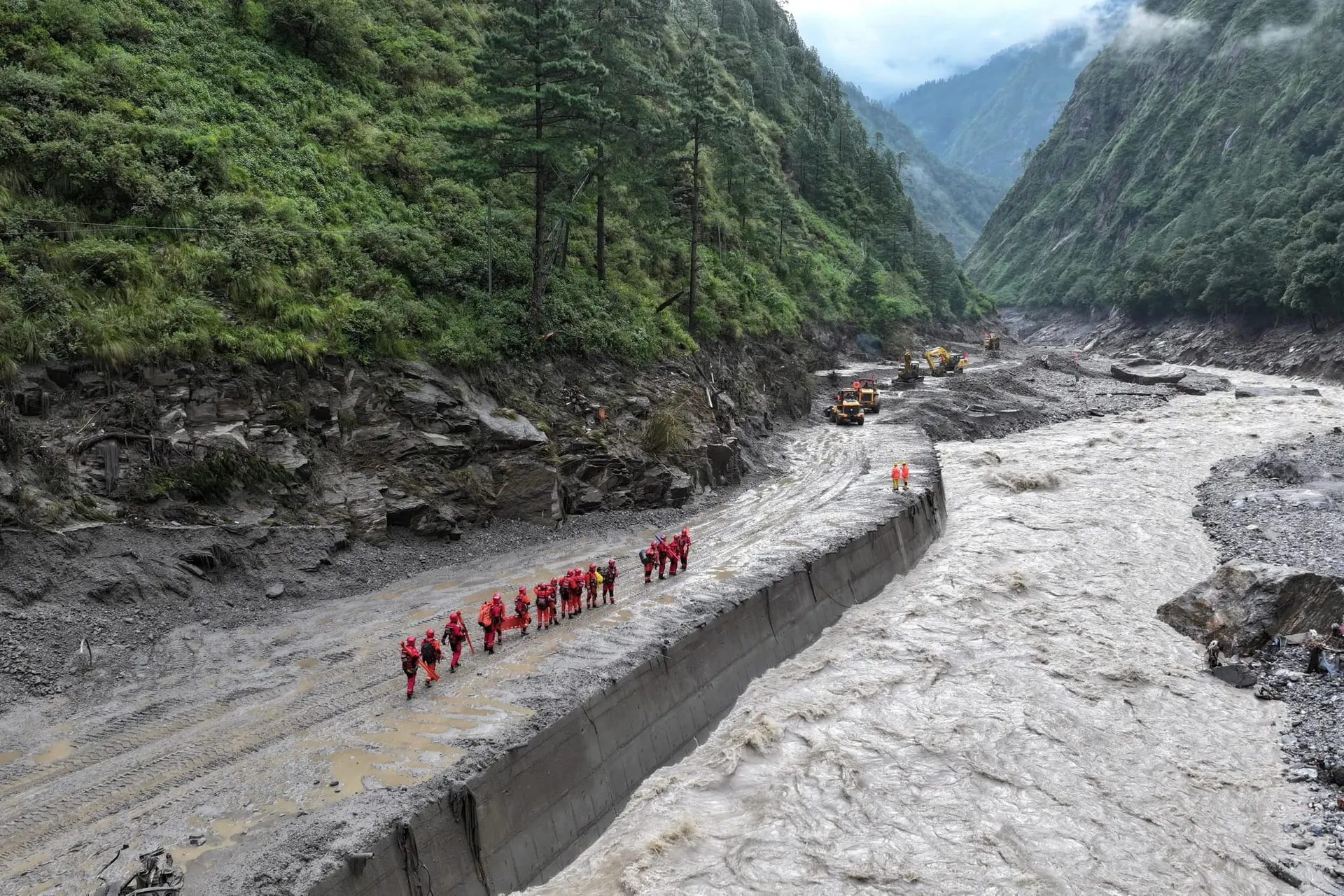
When an elite Chinese rescue team finally hiked through virgin forest to reach the Gyirong port two days later, they found no buildings left to search. The flood had not just damaged the crown jewel of China’s Belt and Road Initiative in the Himalayas; it had atomized it.
“There was no road... it was all virgin forest and sheer cliffs. As far as the eye could see, there was nothing but ruins.”— Zou Mingqi
The sheer force of the floodwater carried victims up to 150 miles downstream into neighboring India. The missing list includes 517 foreign tourists and pilgrims, alongside hundreds of hydropower workers. It is a mass casualty event that has vanished more people than the population of a small town. But finding them requires navigating a deeply fractured geopolitical reality.
The Search Across Borders
In Kathmandu, families are caught in an excruciating holding pattern. Nava Pandey flew from Sydney to search for his wife, Sumi Adhikari, who was at the Gyirong immigration building when the water hit. He experienced a cruel moment of false hope when a matching name appeared on a disaster agency list, only to realize the nationality did not match.
The recovery effort is complicated by how the two nations manage information. Nepal has transparently reported nearly 675 dead and requested international forensic teams to help convert science academies into temporary morgues. China, however, initially reported only seven deaths on the Tibet side, despite the Gyirong complex housing thousands.
Steve Tsang, director of the China Institute at SOAS, notes that Beijing views Tibet through a strict national security prism. But the sheer volume of victims is rendering that secrecy unsustainable. Nepal lacks the genetic testing infrastructure to identify bodies scattered across hundreds of miles of river systems, making cross-border and international cooperation a sudden, grim necessity. Even as forensic teams mobilize, a second threat is forming upstream.
The Secondary Disaster
The debris from Wednesday's mudflow did not just wash away; it piled up a few miles upstream of Gyirong to form a massive natural dam. Aerial footage shows this barrier lake is already filling with ongoing rainfall. It has begun to overflow.
If this fragile dam bursts, a second catastrophic flash flood will tear down the exact same route, threatening the rescue workers and forensic teams currently staging in the valley. Rescuers and vehicles have already been forced to retreat to higher ground, halting recovery efforts just as international help arrives.
The disaster mirrors recent catastrophic floods at Rasuwagadhi and Thame, proving that mega-infrastructure in the region can no longer rely on surviving tectonic shifts alone. The mountains have made the new stakes clear: you cannot engineer a border crossing for earthquakes if you do not plan for the ice.
What people are saying

“New imagery from @vantortech confirms that the China-Nepal Rasuwagadhi border crossing has been completely destroyed, with the glacial flood completely scouring the valley floor. At least 359 people are dead and nearly 1,000 missing, according to local authorities.”

“98 people have been confirmed dead after catastrophic flash floods crashed through the China-Nepal border. - 47 Americans missing (NYP) - 391 tourists missing. - Flood may have been caused by a massive chunk of ice snapping off a glacier. - "A chunk of ice with a width of”

“Scary visuals from today show people desperately running for safety as the flash flood hits Gyirong Port, China, but they couldn’t find a safe place to escape. The flood later hit Nepal, with hundreds reported missing, including 126 Indian tourists.”
Anatomy of the Gyirong Flood
More stories