Lego Posts $6.54B Record Revenue While Rivals Stumble
The Danish toymaker saw profits jump 32% by targeting both budget-conscious parents and adult hobbyists while rejecting AI for product design.
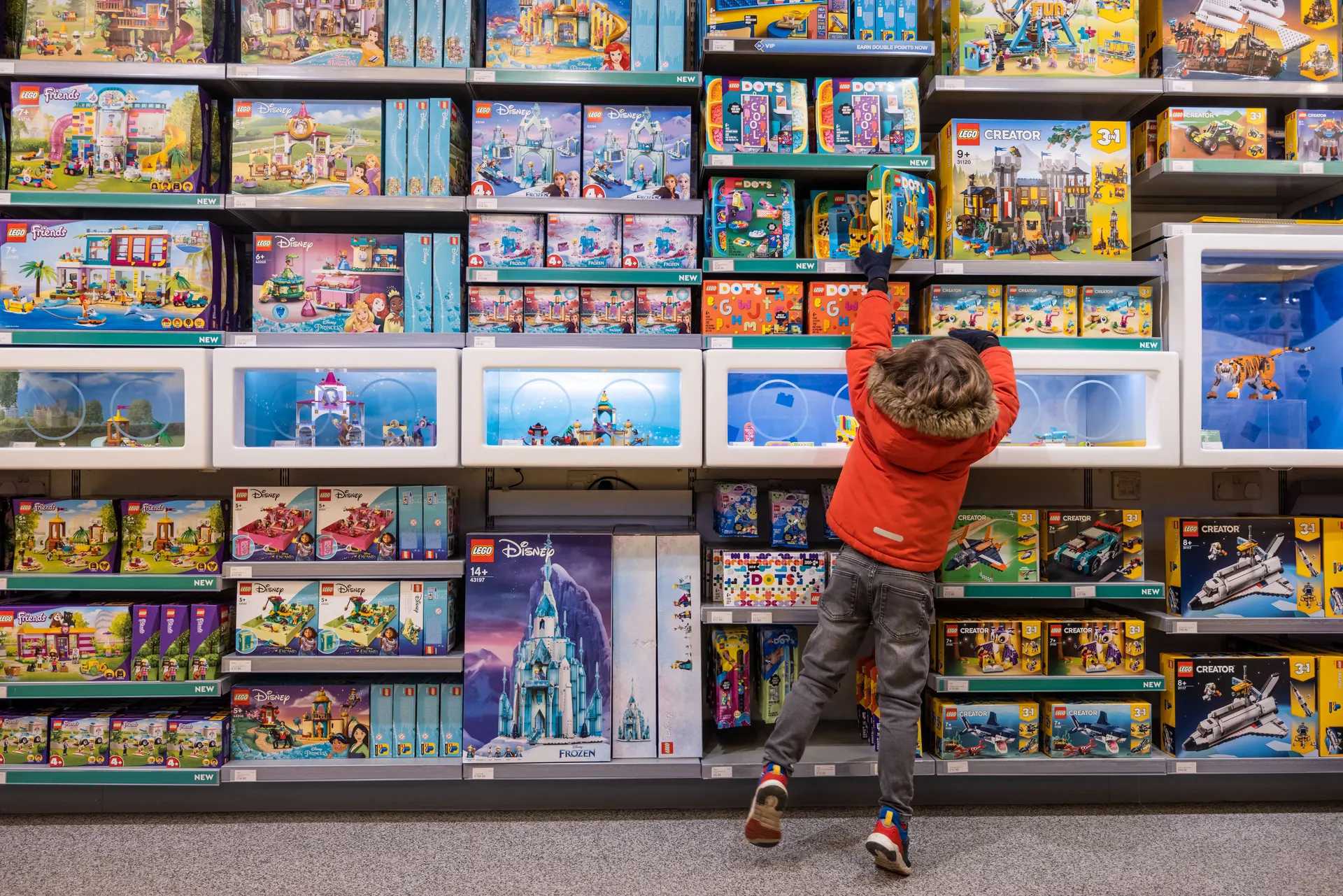
The global toy industry is currently navigating a maze of cautious consumers and fractured attention spans. Yet Lego just smashed through the noise, posting a record 41.9 billion Danish kroner (about $6.54 billion) in first-half revenue for 2026. That represents a massive 21% year-over-year surge, leaving traditional rivals scrambling to understand the Danish giant's playbook.
The $250 Collectible and the $30 Gift
Lego didn't get to $6.54 billion by selling standard bricks to kids. CEO Niels B. Christiansen is executing a strategy that aggressively targets the extremes of the consumer market. You can buy a $30 entry-level kit for a birthday party, or you can drop $250 on a massive, 2,000-piece premium model designed for an adult's display shelf.
This broad demographic appeal is supercharged by cultural cross-pollination. Lego is translating global phenomena into physical experiences, rolling out a $199.99 replica of the FIFA World Cup trophy, interactive Pokémon sets, and tie-ins with Netflix’s K-Pop Demon Hunters. By treating these properties as multi-generational experiences rather than cheap merchandise, Lego has created a self-sustaining hype cycle.
“We also see more kids in the brand, which is really exciting for us that we managed to grow both the number of kids and consumers active, and also the total amount that they’re buying.”— Niels B. Christiansen
The sheer output required to feed this demand is staggering. The company introduced over 330 new sets in the first six months of the year alone. While consumer spending in China remains cautious, massive growth across the Americas and Europe has more than offset the regional hesitation.
Drawing a Human Line in the Sand

In an era where every major corporation is rushing to replace creative labor with generative algorithms, Lego is making a remarkably contrarian bet. The company is drawing a firm line in the sand regarding AI in its creative process.
Christiansen has assured fans that Lego will never launch a product entirely designed by artificial intelligence. While the 34,000-employee company is perfectly happy to deploy algorithms for backend logistics and operational efficiency, creative design remains strictly the domain of human designers.
It is a strategy that protects the authentic soul of the brand. When Lego flirted with bankruptcy in the early 2000s, it was because the company lost touch with the basic joy of creative play. By safeguarding human imagination today, Lego ensures its premium sets feel like passion projects rather than algorithmically generated cash grabs.
The Green Supply Chain Moat
There is a hidden advantage powering Lego’s 32% surge in net profit: its supply chain. Spiking oil prices, exacerbated by geopolitical conflicts, have driven up the cost of traditional fossil-fuel-based plastics. For most toymakers, this means severe margin compression.
For Lego, an aggressive pivot toward sustainable materials has acted as a financial shield. The company has vastly accelerated its green transition, pushing toward a goal of a fully sustainable supply chain by 2032. It is also building a 160,000-panel solar park in Billund, Denmark, set to open in 2027 to cover the local town's electricity needs.
This infrastructure expansion extends to the United States, where a massive new factory and distribution center in Virginia will open by mid-2027. By localizing production and moving away from fossil fuels, Lego isn't just cutting carbon emissions—it is building an operational fortress. The future of play, it turns out, belongs to those who control their own materials and trust their human creators.
What people are saying

“𝗧𝗶𝗸𝗧𝗼𝗸 𝘂𝗽𝗱𝗮𝘁𝗲𝘀 ➷ lgeat 🗓️ 20 | 08 | 26 Quality time ✨️ @.LYKN 🔗 #Lego_Rapeepong #LYKN”

“Black Panther currently has the highest AFK rate in Marvel Rivals ranked matches at 4.19%, followed closely by Daredevil at 3.93% and Spider-Man at 3.85%. Iron Fist sits at 3.43%, while Black Cat rounds out the top five at 3.29%.”


“StonkFun is now listed on @DefiLlama! Ranked #44 among all revenue-generating applications over the past 7 days.”

Drivers of Lego's Record Revenue
More stories