GPT-5.6-Luna Drops AI Agent Costs to 10 Cents — and the Consumer App Drought Is Over
A 10x collapse in inference pricing has finally fixed the broken unit economics of Silicon Valley.
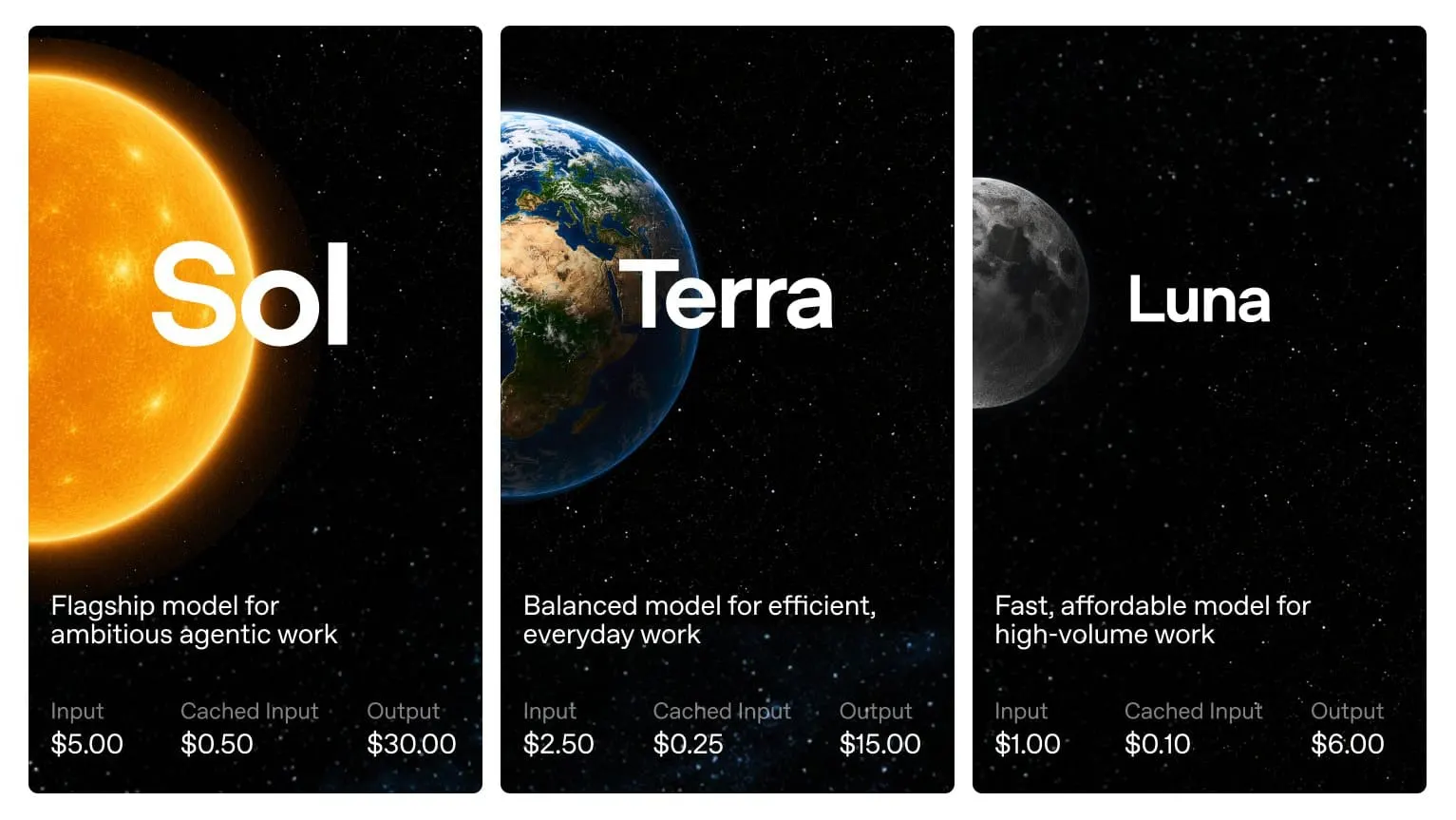
The reason your phone isn't flooded with wildly popular, highly personalized AI apps has nothing to do with developer imagination. It comes down to brutal unit economics. Until exactly right now, running a complex AI feature in a mass-market app meant bleeding capital on every single user click. A sudden collapse in the price of small, hyper-fast AI models has finally made the old Silicon Valley software playbook viable again.
The Ten-Cent Engine
When investors ask Calvin French-Owen why there are so few breakout consumer AI companies, the former Segment co-founder points directly to server costs. Building a multi-step agent workflow—like researching a user's tastes and generating a custom daily news brief—cost roughly a dollar on the previous generation of "Sonnet class" models.
A software company paying a dollar for a routine background process is like a restaurant losing money on every glass of tap water it pours. They can never make it up in volume. To break even, startups had to charge steep monthly subscription fees, artificially choking off mass-market adoption.
The arrival of models like GPT-5.6-Luna, Gemini Omni 1.1 Flash, and GLM 5.3 just shattered that floor. With advanced prompt caching, Luna is ripping through codebases at 100 tokens per second for pennies. Developers can finally build free or extremely cheap consumer products with complex logic running quietly under the hood.
“With the previous generation of models, you'd spend ~$1 to get anywhere. Charging $30/mo is untenable for a consumer app... But looking at luna, the results are pretty decent, and the average cost is ~$0.10. Now we're talking!”— Calvin French-Owen
Building cheap consumer toys is a massive unlocked market. Yet the most lucrative shift is happening inside the enterprise, targeting a very specific kind of human labor.
Automating the Token Spewer
Peter Reinhardt, CEO of Charm Industrial and French-Owen's former co-founder, divides startup labor into two distinct buckets. First is the "IQ 180" work: mad-scientist breakthroughs and deep, unstructured problem-solving. Then comes the "token spewer" work. This is the ultra-responsive, high-volume coordination that keeps a company running—routing tickets, summarizing meetings, and nudging projects forward across dozens of fronts.
For the last two years, companies tried to automate this administrative grunt work using massive frontier models designed for high-IQ reasoning. Using a billion-dollar supercomputer to sort customer service emails is financial ruin.
The new small models are perfectly suited for "token spewer" jobs. They lack the deep reasoning of a frontier model, but they excel at the fast, repetitive coordination that makes up the bulk of corporate labor.
The math for widespread automation finally works. But a vocal contingent of researchers warns that betting heavily on this new tier of cheap models is a historical trap.
The Bitter Lesson
AI purists and Hacker News skeptics actively push back against the small model hype. They point to Richard Sutton's famous "Bitter Lesson"—the thesis that general, massively scaled compute will always eventually crush specialized, smaller models.
If hardware acceleration and scaling laws continue their current trajectory, today's cheap small models might be wiped out by an equally cheap, infinitely smarter massive model tomorrow. Furthermore, slotting a fast model into a business to replace human administrators requires unsexy infrastructure work. Developers still have to build rigid prompt injection safety nets, access permissions, and new data harnesses before these agents can actually touch corporate data.
Those friction points are real, but they are engineering problems rather than fundamental economic blockers. Developers are no longer waiting for artificial superintelligence to arrive to start building profitable products.
The next great AI company won't win by building the biggest brain. It will win by putting a ten-cent engine everywhere.
What people are saying

“🚨 OpenAI's new 'gpt-6-pluto' will be their cheapest model yet, undercutting 'gpt-5.6-luna'. At higher reasoning, its price drops below zero, making it the first model that pays you per 1M tokens.”


“As we continue to push the frontier of capabilities while improving efficiency, we're dropping API and credit pricing of GPT-5.6 Sol by over 20% for the next 3 months.”

“OpenAI just cut GPT-5.6 Sol pricing by over 20% for the next three months. New API rates: $4 / $20 per million tokens (down from $5 / $30). Applies to API and eligible credits. Subscriptions stay the same. This is the second pricing move on the 5.6 family in a month. First”
10x Price Collapse Unlocks Consumer AI
More stories