Apple's M5 Ultra Mac Studio Brings a Massive AI Server to the Desk
By chaining four chips together, the new $5,499 machine lets developers run massive AI models offline—if they can get their hands on one.
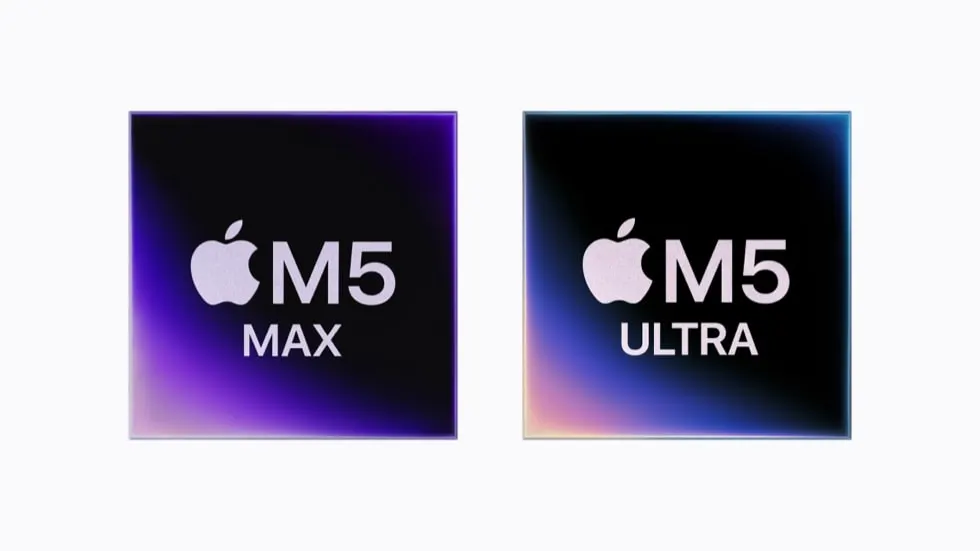
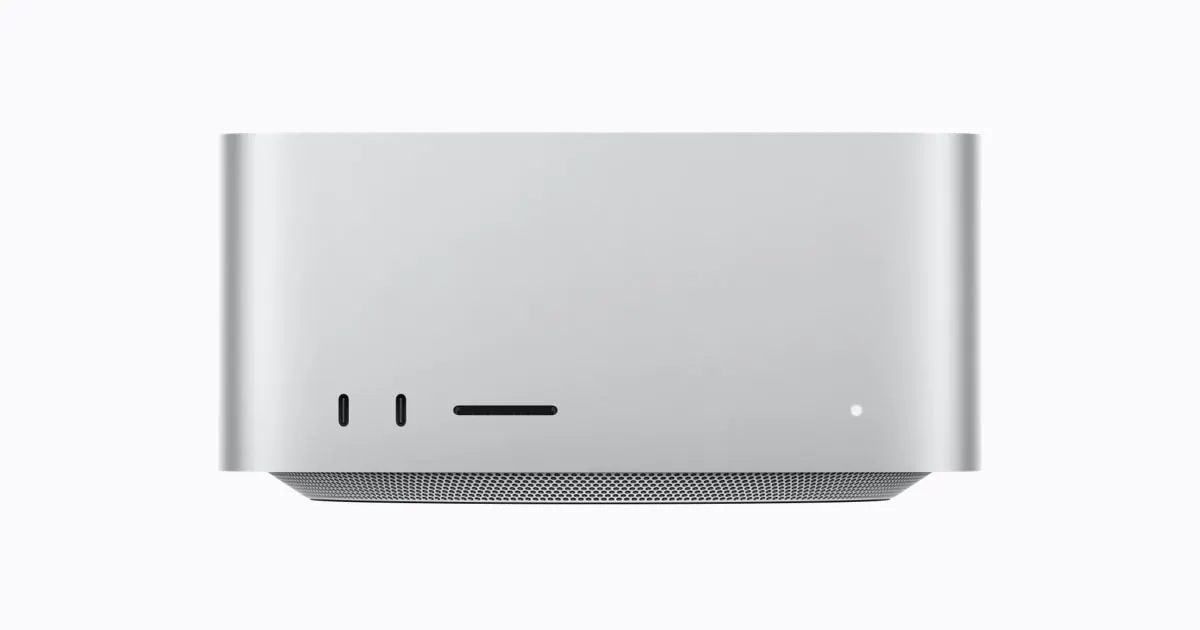
The latest Mac Studio looks exactly like its predecessor—a modest, unassuming silver cube. But inside, Apple has engineered a processor so massive it is actually four chips stitched together. By launching the M5 Max and M5 Ultra Mac Studio, Apple isn't just updating a workstation for creative professionals. The company is actively trying to rip enterprise-grade artificial intelligence out of the cloud and drop it directly onto your desk.
The Quad-Die Monster
Apple’s M5 Ultra is a feat of microscopic engineering. For the first time, the company is using a quad-die architecture, binding two dual-die M5 Max chips together via its next-generation "UltraFusion" technology. This seamless connection operates with 4.4TB/s of bandwidth, tricking the computer into treating four distinct silicon wafers as a single, monstrous brain.
The sheer scale of the silicon is staggering. The M5 Ultra boasts a 36-core CPU, up to an 80-core GPU, and a 32-core Neural Engine designed specifically for machine learning tasks. It delivers up to 4.5x faster AI processing than the previous M3 Ultra, all while sipping a fraction of the power required by a traditional server rack.
“It's no wonder the M5 Ultra Mac Studio starts at $5,499 — it's meant more for the likes of Pixar, not typical creatives.”— Devindra Hardawar
Apple has also overhauled the machine’s foundational architecture. A new PCIe Gen 6 SSD setup doubles storage speeds, while a custom "N1" networking chip brings Wi-Fi 7 and Bluetooth 6 to the Mac for the first time. For high-end film production, the studio even introduces genlock synchronization over USB-C, a feature specifically designed to sync perfectly with the upcoming iPhone 17 Pro.
Escaping the Cloud Timeshare
The real breakthrough of the M5 Ultra isn't in its raw speed, but its capacity. The machine can be configured with up to 512GB of unified memory, boasting a staggering 1.2TB/s of bandwidth. For AI researchers and data scientists, this is a watershed moment.
Currently, running massive Large Language Models (LLMs) with hundreds of billions of parameters requires renting expensive compute time from cloud providers like AWS or Azure. It introduces latency, racks up exorbitant subscription fees, and forces companies to upload proprietary codebases to remote servers. By offering 512GB of RAM on a desktop machine, Apple is allowing developers to run these massive models entirely locally.
If one machine isn't enough, Apple has built a clever contingency plan. The new Mac Studio features Thunderbolt 5 ports with 120Gb/s of bandwidth, allowing users to daisy-chain multiple machines together. This hardware clustering essentially lets developers build a modular, high-speed AI data center right in their office.
The Toll of 'RAMageddon'
But bringing server-level power to the desktop comes with serious supply chain friction. The tech industry is currently in the grip of severe global memory shortages, driven entirely by the insatiable buildout of AI data centers worldwide.
This crunch has forced Apple to raise prices across the board. The base M5 Ultra Mac Studio now starts at $5,499, a $200 premium over its predecessor. The entry-level M5 Max model starts at $2,499 for just 36GB of memory.
Furthermore, early adopters will have to wait for the highest-end specifications. While standard models will hit shelves on September 22, machines equipped with the coveted 512GB memory configuration are delayed until late October. These towering price tags and component shortages risk gating off top-tier local AI research to only the most well-funded enterprises.
The Personal Server Era
Despite the high barrier to entry, Apple is tapping into a highly lucrative consumer trend. The company’s Mac business surged nearly 30% last quarter, a spike directly attributed to developers buying up hardware to run local AI agents. Apple's goal is to dominate this new market completely, controlling both the silicon and the software stack with macOS 27.
We are witnessing a historical parallel to the computing revolution of the 1970s and 80s. Just as the microcomputer freed users from having to "timeshare" on massive, centralized IBM mainframes, the M5 Ultra is freeing developers from timesharing on centralized cloud infrastructure.
By packing hundreds of gigabytes of unified memory and 80 GPU cores into a quiet silver box, Apple hasn't just updated a computer. They have given birth to the true personal AI server, and redefined what a desktop machine is capable of doing.
What people are saying

“M5 Ultra has also landed - Up to 36-core CPU - Up to 80-core GPU - 1.2TB/s for unified memory (A fully specced-out M5 Ultra Mac Studio with 16TB storage and 256GB of memory now costs $18,299)”

“Apple has introduced the M6 and M5 Ultra. Focus on performance and running AI locally. M6 is Apple’s first chip built on a 2nm process and debuts inside the new Mac mini. It features: • New 12-core CPU with 2 super cores, 4 performance cores and 6 efficiency cores • Up to”


“APPLE $AAPL LAUNCHES NEW MAC MINI AND MAC STUDIO, PRE-ORDERS TODAY Mac mini with M6: - 12-core CPU and 12-core GPU, two more cores each than M4 - Neural Accelerators in every GPU core for the first time on Mac mini - Dual 16-core Neural Engine - 16GB unified memory standard, up”
The Shift to Local AI
More stories