Anthropic and Vercel Kill the Custom Bot — 1 Codebase Now Rules 15 Chat Apps
A new open-source cookbook wires Claude Managed Agents directly into a universal chat layer, erasing the hardest parts of building AI assistants.
Last year, dropping a custom AI agent into both a company Slack channel and a customer-facing website meant building two separate digital brains. Developers had to wire distinct authentication flows, map out separate memory databases, and pray the server didn't time out while the bot researched an answer. Today, that entire headache has been reduced to a single GitHub repo. Anthropic and Vercel have just released a cookbook that wires Claude Managed Agents directly into Vercel’s Chat SDK, creating what they call a "universal chat layer."
The End of the Agent Loop
For anyone who hasn't tried to build an AI agent, the hardest part isn't making it smart—it's keeping it awake. Historically, developers had to manage the "agent loop" on their own servers. If an AI needed five minutes to comb through a database, serverless architectures would often drop the connection, leaving a spinning loading wheel and a forgotten context window.
Anthropic’s new open-source cookbook flips this architecture on its head by moving the heavy lifting entirely server-side. Claude Managed Agents (CMA) now hold the memory state and execute tools on Anthropic's own infrastructure. Meanwhile, Vercel handles the streaming interface and the durable polling required to keep the connection alive.
“CMA is a remarkably elegant architecture. The 'hard parts' of the agent are managed, but it doesn't take away from your freedom to customize.”— Guillermo Rauch
This division of labor unlocks a kind of portability that developers have been chasing for a decade, but it forces a new question about where an agent actually lives.
The 15-to-1 Multiplier
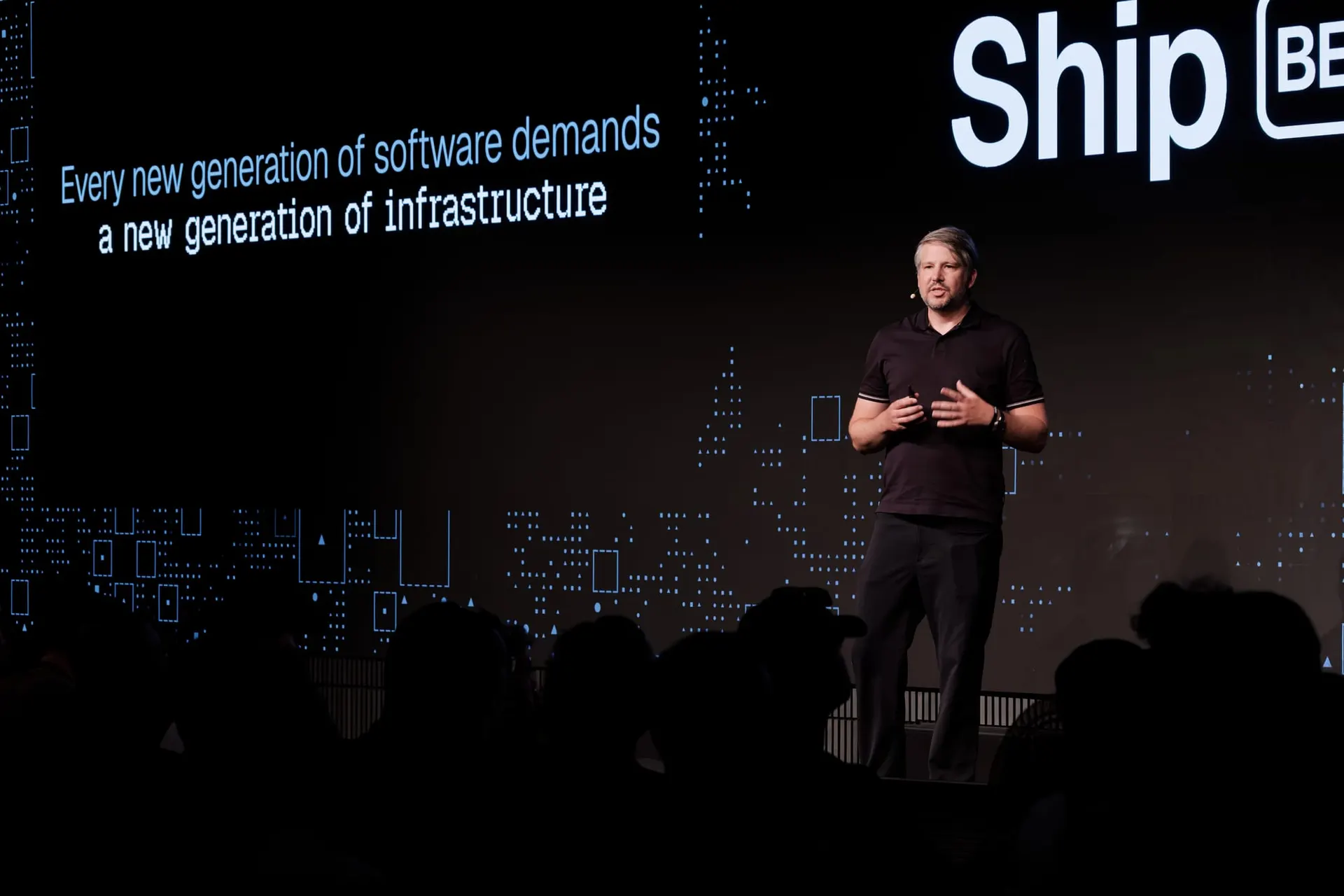
By decoupling the AI's brain from the chat window, the cookbook delivers the holy grail of deployment: write once, run everywhere.
With this integration, a single codebase yields an agent that operates natively across more than 15 distinct chat surfaces, from Microsoft Teams and Discord to WhatsApp and custom web interfaces. Think of it like a universal travel adapter—instead of buying a new plug for London, Tokyo, and New York, you just carry one block that instantly reshapes its prongs to fit whatever socket it touches. Vercel acts as the adapter, translating the user's local UI while Anthropic acts as the constant electrical current.
The developer no longer builds for Slack; they build for Claude, and Vercel routes the conversation. It is an incredibly efficient system. But as the infrastructure gets democratized, independent bot builders are suddenly looking over their shoulders at enterprise giants moving in from the top down.
The Squeeze on B2B Bots
Independent developers aren't the only ones realizing that universal chat layers alter the economics of AI. Just a day before Anthropic published the cookbook, Salesforce CEO Marc Benioff announced "Claudeforce," a massive integration natively embedding Claude across the Salesforce platform.
Through Claudeforce, the AI gets direct, governed access to Tableau, Data 360, and—crucially—Slack. Benioff is selling enterprise-grade data access without ever leaving the chat interface. While indie developers are using Vercel to spin up lightweight universal agents, Salesforce is building a walled garden that already owns the enterprise data.
This creates a brutal squeeze for third-party B2B bot developers. If universal chat infrastructure is now a cheap commodity, and giants like Salesforce are building native, governed AI straight into the tools companies already use, the market for bespoke enterprise bots might evaporate before it fully matures.
Speed vs. Sovereignty
The shift toward managed agents represents a classic technology trade-off: engineering teams are trading control over the runtime environment for unprecedented speed of deployment. If Anthropic manages the agent's memory and Vercel manages the routing, the developer is essentially renting the entire stack.
That rental is undeniably powerful. An agent can now research a topic in the background, remember its context perfectly, and deliver the answer to a user on WhatsApp with virtually zero backend maintenance. The era of painstakingly building bespoke bots for individual messaging apps is definitively over.
The companies that win this next era won't waste cycles wiring databases to chat windows. They will simply be raising smarter agents.
What people are saying

“a skill people at Anthropic have been using a lot recently: ELI5 /eli5 <what you want explained> "explain like I'm someone who knows nothing about this topic, using a HTML artifact with big pictures and few words"”

“Anthropic’s Claude AI Suffers Another Outage With Elevated Errors Details: Anthropic's Claude AI platform experienced another wave of elevated errors on August 24, 2026, marking yet another disruption in what has become a troubling pattern of instability”


“Anthropic's Claude AI just hit a major partial outage today. Here's what you need to know. On August 24, 2026, Anthropic's status page confirmed elevated errors across Claude Mythos 5, Fable 5, Opus 5, Opus 4.8, and other models. the API, Claude Code,”

One Codebase Rules 15 Chat Apps
More stories