The Invisible Revolution: Bringing Quantum Power to Everyday Devices by 2030
How miniaturized sensors and post-quantum security are quietly entering our pockets and cars.
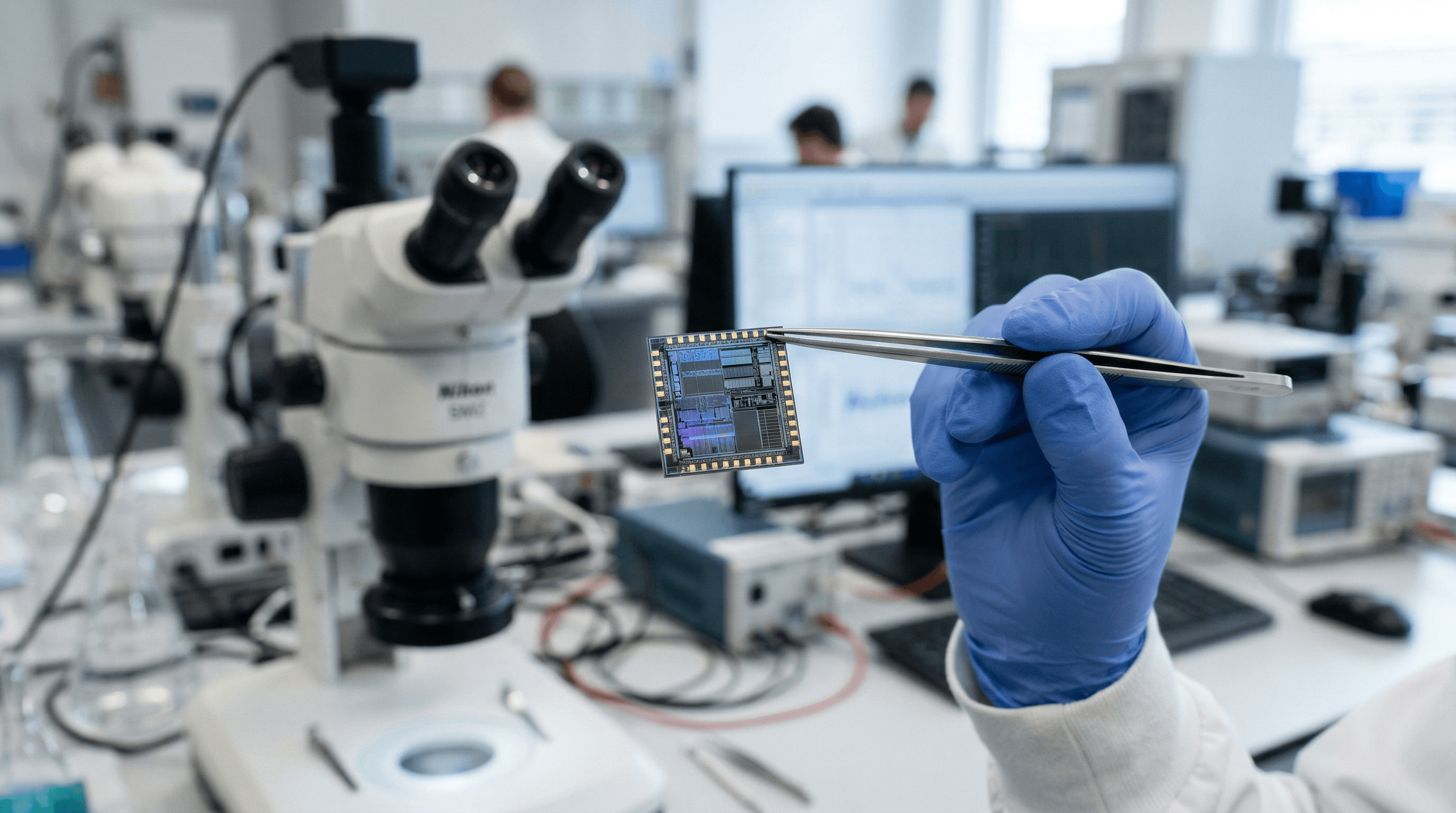
For decades, quantum computing has been synonymous with giant, gold-plated chandeliers kept at temperatures colder than deep space. But a quiet shift is underway that brings these exotic physics into the palm of your hand. By 2030, quantum technology won't just be for national labs; it will be the silent engine powering your phone's security and your car's navigation.
The Race to Quantum-Proof Our Digital Lives
The looming threat of Q-Day—the hypothetical point where quantum computers can crack current encryption—has accelerated a global race for security. While experts estimate this breaking point might arrive by 2030, the preparation is happening now. Samsung has already led the way by integrating hardware-based post-quantum cryptography chips into mobile devices as of 2025.
These chips, like the S3SSE2A, are designed to protect sensitive data against 'harvest now, decrypt later' attacks. In this scenario, bad actors steal encrypted data today, waiting for the quantum processing power of 2030 to unlock it. By locking the door now, companies are ensuring that the 2030 transition is seamless for the average user.
This shift represents the first wave of everyday quantum technology. It is not about a device that calculates at light speed, but rather a device that stays safe in a world where traditional math-based locks no longer hold. For the consumer, this security is entirely invisible, yet it is arguably the most critical application of the decade.
Breaking the Cold Barrier: Room-Temperature Reality
The biggest barrier to quantum adoption has always been the requirement for extreme cooling. Traditional systems need temperatures near absolute zero to function, making them impossible to fit in a car, let alone a pocket. However, companies like Quantum Brilliance and ORCA Computing are proving that room-temperature operation is possible using synthetic diamonds and photonics.
These accelerators are moving out of the lab and into standard server racks. At the same time, researchers at Stanford and Xanadu have successfully demonstrated light-based qubits on a silicon chip. This allow quantum hardware to eventually be manufactured in the same facilities that produce today's smartphone processors.
Dr. Katrin Kobe of Bosch Quantum Sensing notes that the goal is to miniaturize sensors until they are small enough for medical diagnostics and navigation. Bosch has already prototyped a quantum sensor the size of a smartphone that can monitor heart rhythms with the precision of an ECG. By 2030, these sensors could replace GPS in areas where satellite signals are blocked, providing ultra-precise positioning for autonomous vehicles.